The traditionalists will be very disappointed, but the Titanic II will NOT have steam powered coal engines.
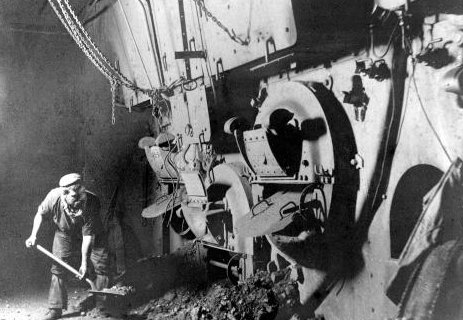
Steam might sound like a romantic idea, but it is very inefficient and impractical compared to modern methods. Imagine the labour required to constantly shovel the coal into the boilers. Imagine the dirt. Imagine the emissions. Imagine the heat. Imagine the lack of health and safety for the crew working in those conditions. What ports could even provide coal now, for cruise ships?

The Titanic II will employ modern diesel-electric propulsion:
2 × Wärtsilä 12V46F
2 × Wärtsilä 8L46F
48,000 kW (64,000 hp) (combined)
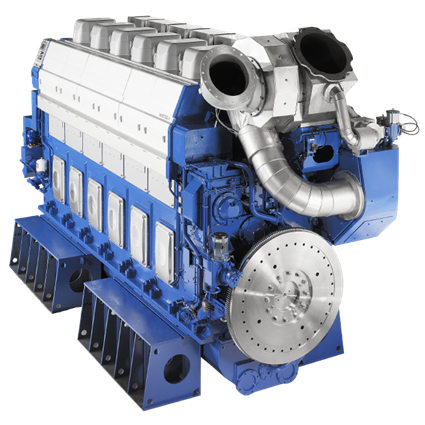
The Titanic II will have three ‘Azipods’ that ‘pull’ the ship through the water, rather than push’. These are propellers mounted on ‘pods’ attached to the underside of the hull, that can rotate 360 degrees. These will make the ship very manoeuvrable*. The propellers are actually powered by electric motors. Four generators (image above) in the hull, powered by marine diesel fuel, will generate the required electricity for the pods and all the ships other electrical systems. It is very clean, much safer and takes up less space within the ship’s hull, compared to steam boilers and coal.

The Azipods also do away with the need for a rudder. They can rotate to change the ships direction.
Below is a picture of the Titanic II hull model that was used for water tank testing. Note the three pods (blue) and the fake rudder (brown, sticking out from the yellow hull). The rudder only just touches the water and does not descent down in to it. It will not move or steer the ship. It is just there for historic aesthetics.

Below are two renderings of the Titanic II, which makes the Azipod configuration clearer:


Many cruise ship now use Pods. The only modern ocean liner, Cunard’s wonderful Queen Mary 2, has four Pods, for example. Although larger that the Titanic II’s pods, once again they pull the ship through the water rather than push, so appear to be mounted backwards. In fact the front two are fixed and the back two can rotate 360 Degrees.
The ship is three times bigger than the Titanic, so the QM2’s pods weigh 260 tons each. They are also very powerful, enabling the QM2 to achieve 30+ knots. This is much faster than the original Titanic’s 23 knots, which will also be the maximum speed of the Titanic II.
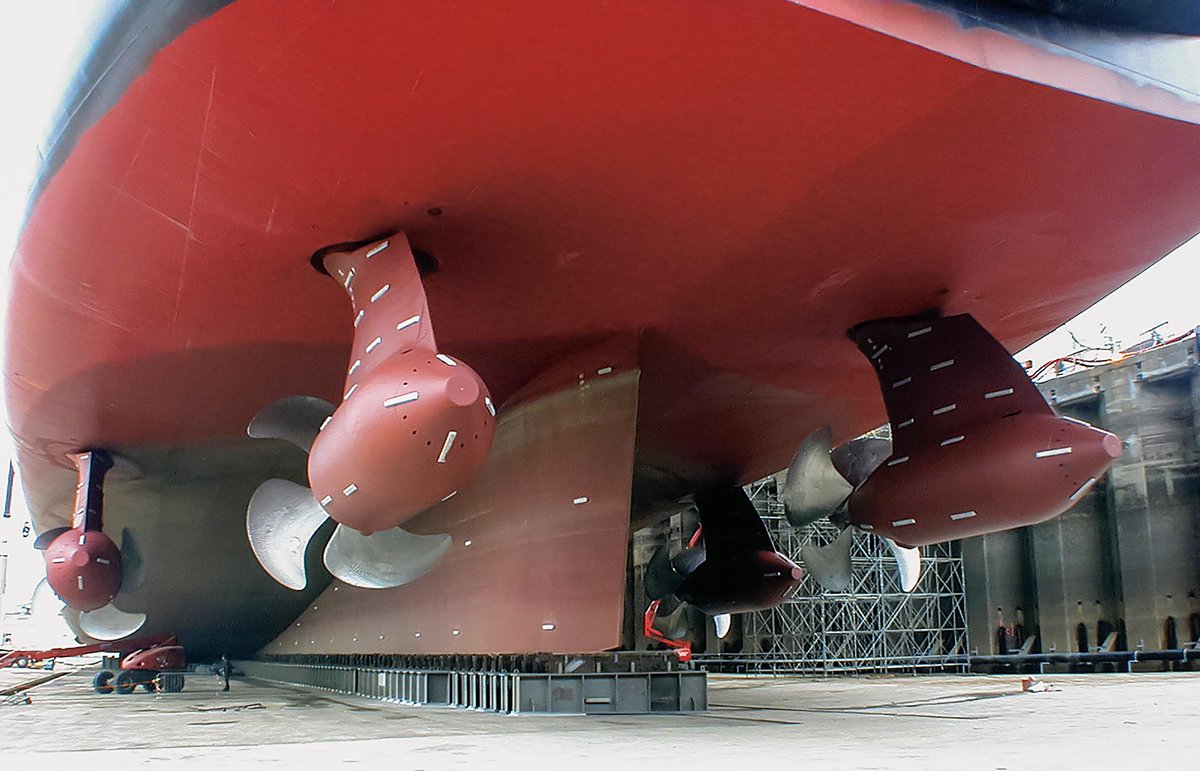
The Pods can even all turn at right angles and push the ship sideways for docking etc. (More Azipod info. in video – HERE)
Most modern cruise ships also have bow thrusters (smaller propellers on either side of the bow) below the waterline, to also assist in docking etc. The Titanic II will be no exception.
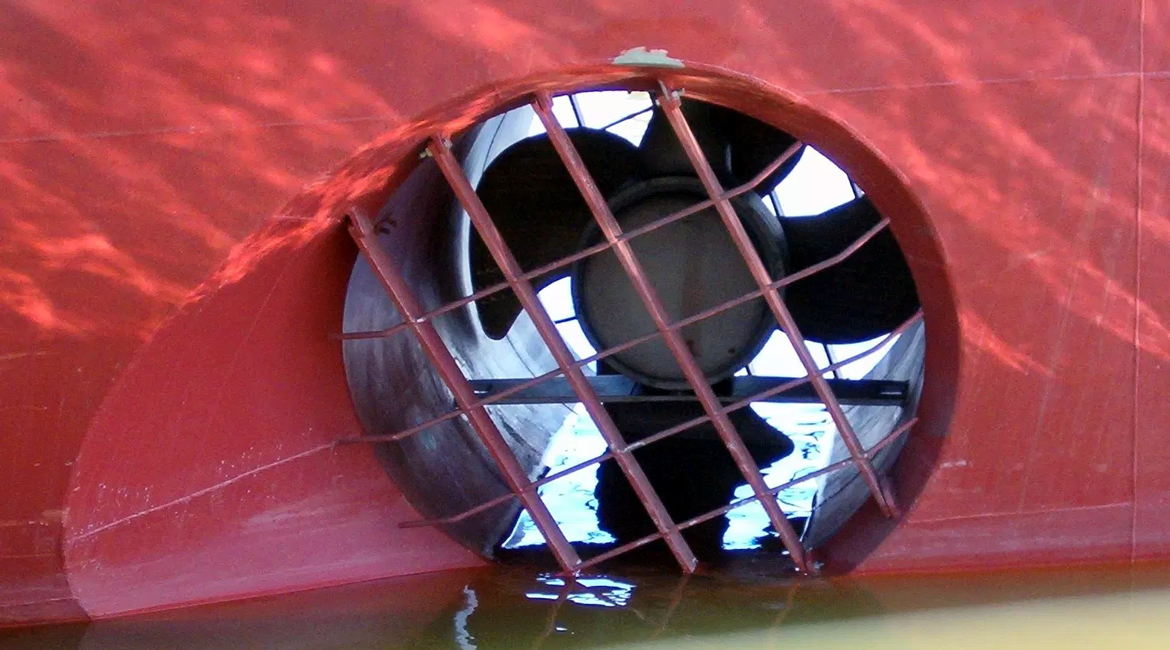
Below, you can just see the two bow thrusters (two small black circles) on the front of the Titanic II’s bow, on the red section.
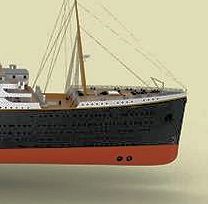
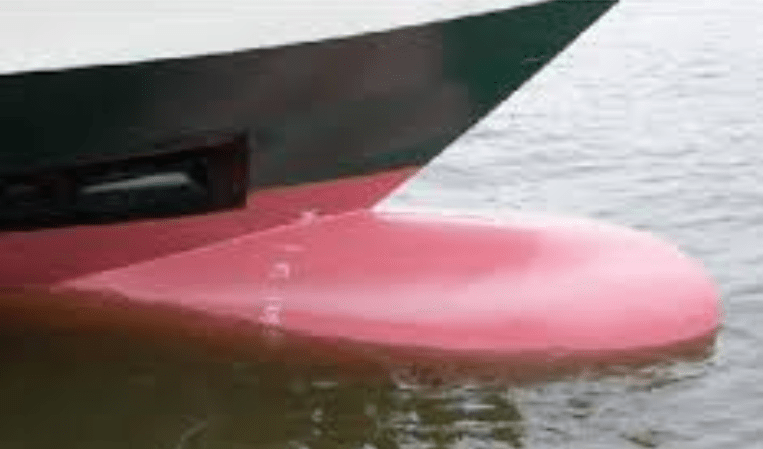
The finished design may also incorporate ‘bulbous bow’ on her bow, to allow her to cut through the water better. These increase fuel efficiency. (The Titanic II renderings so far, do not show one.)
A large amount of space, in the original Titanic’s hull was dedicated to giant steam engines, boilers and many tons of coal (se below).

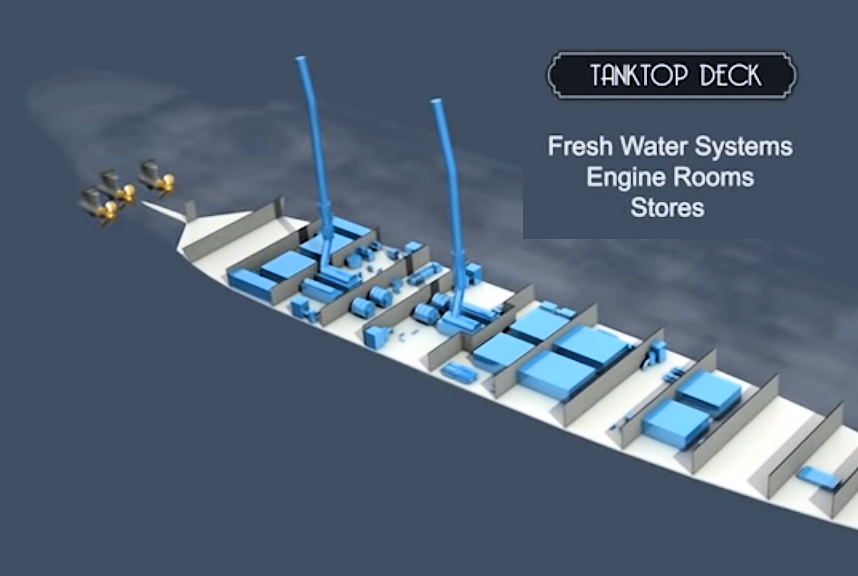
Finally, the rendering below shows how compact the modern generators and other propulsion equipment is. It just occupies a single deck, within the hull. Palmer should gain some space for storage and possibly other facilities (a museum has been suggested)
Note that the generators two exhaust pipes (blue in the rendering below) rise through all the decks above and are discharged from the ships two rear funnels only. Palmer has other plans for the front two funnels – see HERE
Malcolm
*Would the RMS Titanic have even hit the iceberg at all, if she had Azipod technology? Who knows?
Modern Ocean Liner: Queen Mary 2 review: HERE
Links to Malcolm’s Titanic II pages on:
 Titanic II News